

Dog’s nose detects spotted lanternfly eggs
Discover how spotted lanternflies threatens almonds and walnuts. Learn about detection, canine monitoring and management strategies.





Virginia Tech scientists are working with dog handlers to train canines to detect spotted lanternfly, a destructive pest that feeds on a wide variety of crops and plants, including almond and walnut trees, as well as apples, cherries, peaches, and grapes.
While detections are currently limited to the East Coast and eastern Midwest, spotted lanternfly poses a potential threat to western regions.
West Coast growers should remain vigilant
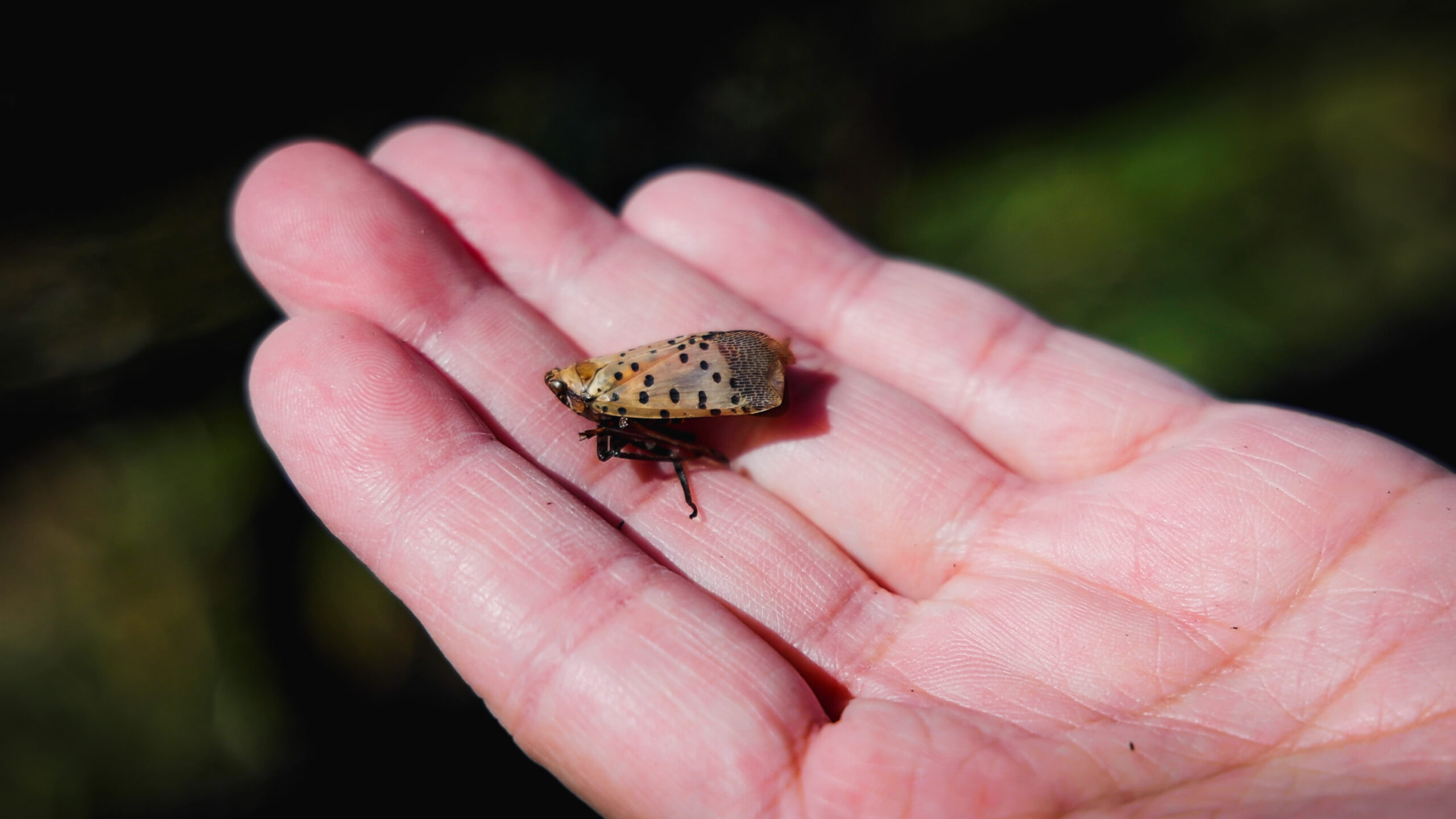
The spotted lantern fly is an invasive insect plaguing plants across the globe.
“The West Coast should be very concerned about this pest because of numerous commercial crops, landscape plants and wild hosts that could support fly populations,” said Surendra Dara, entomologist and director and professor in Oregon State University’s North Willamette Research and Extension Center in Aurora, Oregon.
Powdery mildew, a disease that can be destructive when unmanaged, can spread quickly due to the nature of its reproduction. The researchers determined that dogs’ strong olfactory capabilities can detect powdery mildew better than humans, said Mizuho Nita, a Virginia Cooperative Extension specialist and an associate professor of plant pathology in Virginia Tech’s School for Plant and Environmental Sciences.
The spotted lanternfly is an invasive insect plaguing plants across the globe. The insect sucks sap, young stems and leaves, causing trees to wither, reducing photosynthesis, weakening plants and eventually leading to plant death.
Spotted lanternfly signs and impacts

The spotted lantern fly is an invasive insect plaguing plants around the globe. Photo by Luke Hayes/Virginia Tech.
Feeding causes plants to weep or ooze, creating a fermented odor. Tree trunks display grayish-black trails of wounds. The insects excrete large amounts of honeydew, covering stems and leaves as well as the ground below infested plants.
Spotted lanternflies have been detected in Virginia, Maryland, Pennsylvania, New Jersey, New York and New England. Smaller infestations have been reported in Ohio, Michigan, Indiana, North Carolina and West Virginia. Quarantine zones are in place in Virginia, Maryland, Pennsylvania, Delaware and New Jersey.
Spotted lanternflies can spread long distances through movement of infested material or items containing spotted lanternfly egg masses. Lanternflies can also be a nuisance to landscape and residential industries.
Spotted lanternflies are the main reason for Dara’s outreach that began in 2014. “California is especially at higher risk because of the importance of grapes, peaches and other crops and the presence of spotted lanternfly’s favorite host, the tree-of-heaven, distributed all over the state,” he said.
Because spotted lanternfly hasn’t yet been detected in the West, no studies have been initiated for its detection or control, Dara said.
Limited nut studies
Dara is checking with colleagues investigating spotted lanternfly host preference to see if the lanternflies are a significant threat to almonds, pistachios and pecans. One of Dara’s colleagues has included almonds in a study, which hasn’t concluded. A contact of Dara’s who works with a grower said lanternfly hasn’t been found feeding on almonds.
Classical biological control with natural enemies from an invasive pest’s native area is usually the best strategy for invasive pests, Dara said. Classical biocontrol studies in California suggest imported parasitoids or a pest’s natural enemies are not highly specific to spotted lanternflies, so their release remains uncertain, he said. However, studies indicate that a parasitoid introduced for spongy moth control shows some native natural enemies attacking spotted lanternflies.“It appears that we do not have any natural enemy that is very specific to spotted lanternflies,” Dara said. “That is one major concern, but some native or previously introduced natural enemies seem to be attacking lanternflies, providing some control. Another concern, not just for nut growers, is the ability of spotted lanternflies to hitchhike and the spread of its favorite host, the tree-of-heaven, throughout California, which allows the pest to invade establish, and spread.”
Because several wild hosts favor the pest and since it can hitchhike on inanimate objects, spotted lanternflies possesses a higher chance to spread, survive and multiply, Dara said. “So, not just the farming community, but the general public should also be aware of this pest and its potential threat to their region,” he said.
Dara’s advice to tree nut growers is to watch for research updates and quarantine alerts so they can receive the latest information about spotted lanternflies’ biology, management and spread.
“The best strategy right now is to be able to recognize spotted lanternflies, do everything to prevent its introduction and notify local authorities if you find one,” he said.
Canine detection

Sally Dickinson and her trained detection dog, Flint, search the vineyard at the Winchester AREC for spotted lantern fly egg masses. Photo by Luke Hayes/Virginia Tech.
A canine’s sense of smell is equivalent to detecting a teaspoon of sugar in an Olympic-size swimming pool.
Researchers look to apply the canines’ work to other economically important pests and diseases and hope to develop a network of citizen scientist dog handlers who can be dispatched to detect the latest invasive species.
“We picked powdery mildew because of its relatively obvious scent, but we may find dogs can sniff out other pests and diseases,” Nita said. “I think it is worth exploring in the future.”
Researchers have found that dogs can be trained to detect spotted lanternfly eggs, Nita said. “I think it is useful, especially at the front of lanternfly movement since the flies lay eggs on many different surfaces, including stones and pallets,” he said.
Managing spotted lanternfly
Spotted lanternflies can be managed through insecticides and culturally through traps. Netting can prevent large numbers of adults from establishing on vines, according to Virginia Tech Cooperative Extension.Nita said the project is more about detection, not combatting the pest.
“For management, we do have other tools, but in order to have effective management, we need to find out what is causing the issue,” Nita said.