

Hudson Pecan blends family tradition with modern innovation
Hudson Pecan adapts to shifting global markets with innovation, diversification and vertical integration. See how the business is evolving.





Key takeaways
- Hudson Pecan is a vertically integrated, multi-generation operation
- Chinese demand once drove rapid expansion in the U.S. pecan industry
- Market shifts have pushed growers to diversify sales channels
- Technology and data are improving orchard efficiency
- Variety transitions and storm impacts are reshaping orchards
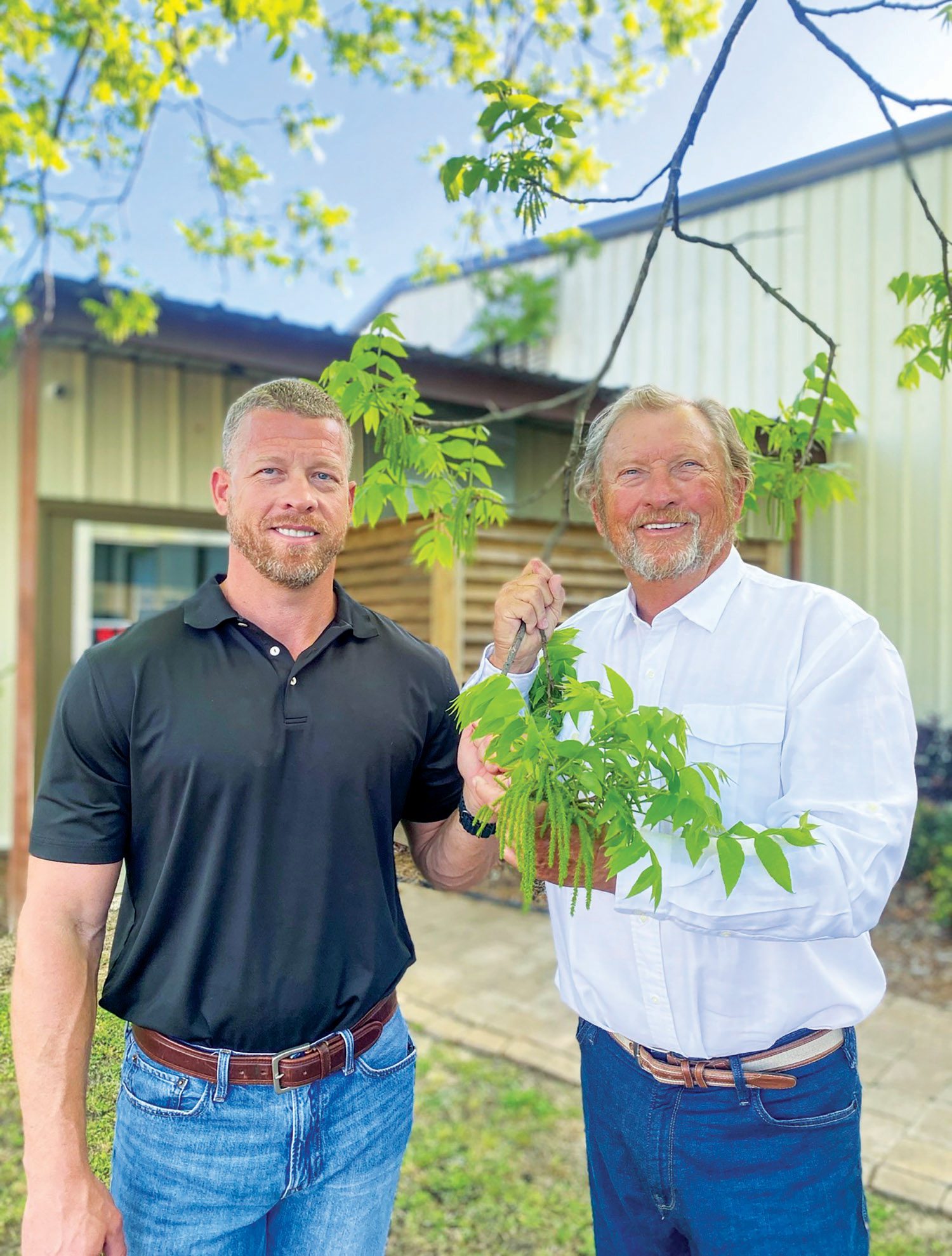
In southern Georgia, pecan trees stretch across thousands of acres at Hudson Pecan, a family-run operation that has grown from humble beginnings into a vertically integrated business serving markets around the world.
Scott Hudson represents the fifth generation of his family to farm the land. The company was officially formed in 1980 by his father, Dr. Randy Hudson, a past president of the National Pecan Growers Association, and his grandfather. The family’s agricultural story, however, stretches back much further.
A growing orchard
Hudson grew up working in the orchards and officially returned to the company full time roughly 15 years ago.
“When I was growing up, we had a couple hundred acres,” he said. “When China became a major market, we started expanding.”
The surge in Chinese demand dramatically reshaped the pecan industry. For years, China served as the dominant export destination for U.S. pecans, absorbing enormous volumes of the crop — and Hudson Pecan was no exception.
“For a long time, all of our crop went to China,” Hudson said. “Everything we grew and everything we could accumulate went there.”
That export channel fueled rapid expansion but also created a dependence that later challenged growers when trade dynamics shifted.
In recent years, the global pecan market has changed significantly, forcing growers to rethink long-standing marketing strategies.
“The United States used to send more than 120 million pounds to China,” Hudson said.
But geopolitical tensions and rising international competition altered that equation. Countries such as South Africa have stepped in to supply some of the demand once filled by American growers. The result is a far more complex marketing environment for companies like Hudson Pecan.
“It was really simple before,” Hudson said. “We would pick the pecans up off the ground, clean them, dry them and ship them to China in the shell.”
Today, the company sells into a much broader range of markets while pursuing new export markets around the world.
Closer to the customer
One of the most significant changes in Hudson Pecan’s strategy has been a shift toward direct consumer engagement.
“What I’ve really pushed for is getting closer to the customer through retail sales,” Hudson said. “We now sell products through online platforms, including an Amazon storefront, while continuing to build our brand presence.”
At the same time, Hudson Pecan is exploring emerging international markets. India is one destination Hudson believes holds promise, even if progress has been slower than expected.
Hudson, who has been to India three times in the last two years, compares the current state of the Indian market to China’s early days as a pecan importer more than a decade ago, when consumer awareness was still developing.
Innovation in the orchard
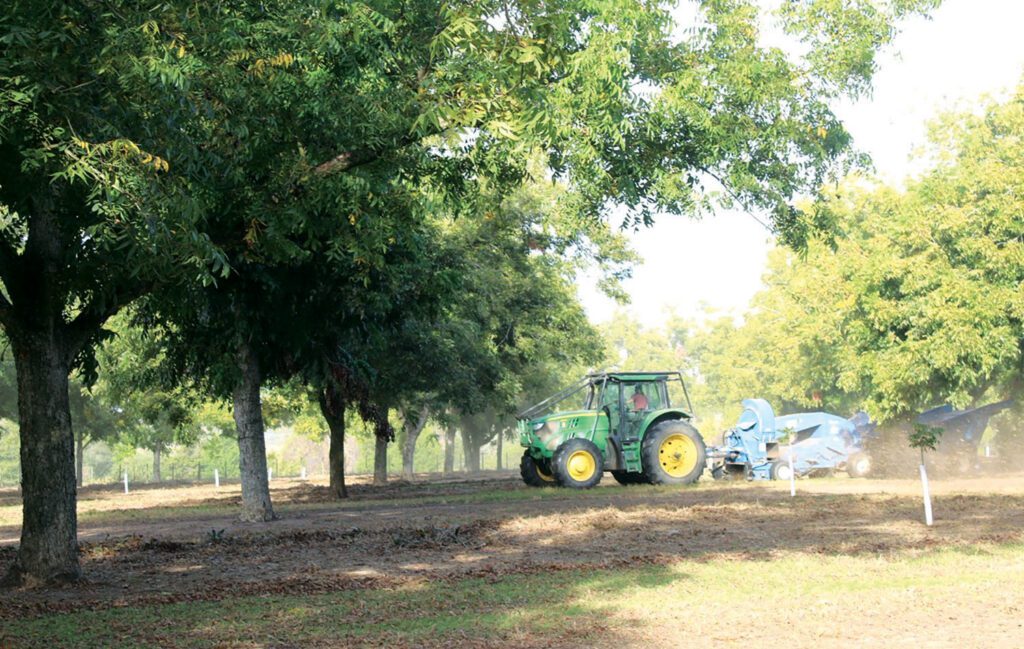
Advances in technology have transformed nearly every aspect of orchard management at Hudson Pecan.
“We were still hand harvesting about 20 years ago,” Hudson said. “Now everything is done with machinery.”
Modern equipment and precision ag tools allow the farm to operate more efficiently than previous generations could have imagined.
Instead of applying fertilizer uniformly across fields, Hudson Pecan now relies on grid soil sampling and data-driven management to determine where nutrients are needed.
“In the past, my grandfather would apply a couple tons of lime every other year along with standard fertilizer,” Hudson said. “Now we grid sample and only apply it where the data says it should go.”
The same modernization extends to processing. Hudson Pecan operates its own cleaning facility and shelling plant, giving the company greater control over quality and product flow.
Vertical integration has long been a cornerstone of Hudson Pecan’s business model. The company not only grows pecans but also buys nuts from other farmers, cleans and shells them, and markets the final product.
“My father is very proud that we’re vertically integrated,” Hudson said. “That’s how we’ve made our living for almost 50 years now.”
Operating across multiple stages of the supply chain can be challenging, particularly during periods of market volatility. Shipping costs, fuel prices and interest rates can all impact profitability once pecans leave the orchard.
Still, Hudson believes the integrated structure provides valuable flexibility.
Recently, the company invested in cold storage capacity that allows pecans to be held longer before entering the market. The facility, now entering its third year, helps the company maintain product quality while managing timing and pricing.
“It gives us another card we can play,” Hudson said. “We can keep inventory fresher and not be forced to sell immediately.”
Varieties in transition
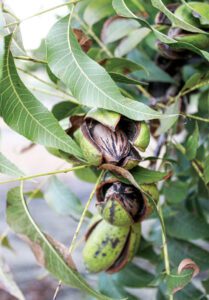
Like many Georgia growers, Hudson Pecan historically relied heavily on the Desirable pecan variety. However, that variety has become increasingly difficult to manage due to disease pressure.
“We’re still that Georgia company leaning hard on the Desirable pecan,” Hudson said. “But it’s terribly scab-prone, and we have to spray it about 12 times a year.”
Storm damage has also taken a toll on older orchards. Hurricanes such as Michael, Idalia, and most recently Helene have toppled trees across the region, forcing growers to replant. Hudson Pecan has begun transitioning to newer varieties, including Pawnee, Avalon, Tanner, Excel and Creek.
Even with that shift, older varieties planted by earlier generations still make up the majority of the farm’s acreage. Hudson estimates approximately 60% of the orchards remain in those legacy varieties.
Family leadership
Despite its size and scope, Hudson Pecan remains a family-centered enterprise.
“We have a fantastic team, but as far as ownership goes, my dad still owns the company,” Hudson said. “I just run it with a great group of people.”
Hudson credits his father’s leadership as the driving force behind the company’s growth.
“He had the guts and the courage to keep expanding,” Hudson said. “He deserves all the credit as the brainchild of this business.”
Even after decades in the industry, Hudson remains optimistic about the future of pecans. The company recently ordered trees to plant another 50 acres, signaling confidence in the crop.
“I love what I sell, and I love what I do,” Hudson said. “The nutritional value of pecans speaks for itself.”
With consumers increasingly focused on health and nutrition, Hudson believes pecans are well-positioned for long-term growth. For Hudson and his family, the goal is not only to sustain the business but also to ensure it continues for generations to come.
“If the world stabilizes a little bit, I’m extremely confident in what the future could be,” he said. “We’re forever bullish on the pecan market.”
FAQ
Who is Hudson Pecan?
A family-run pecan operation in Georgia with a vertically integrated business model.
How did China impact the pecan industry?
China was once the dominant export market, driving demand and expansion.
Why are growers diversifying markets now?
Trade shifts and global competition have made reliance on one market risky.
What technologies are used in pecan farming?
Precision agriculture tools, grid soil sampling and mechanized harvesting.
Why are pecan varieties changing?
Disease pressure and storm damage are pushing growers toward newer varieties.
Photos courtesy of Hudson Pecan.
A graduate of the University of Miami, Keith Loria is an award-winning journalist who has been writing for almost 20 years.