

Amygdalin in almond nectar cuts viruses, gut parasites in honeybees
Healthy bees mean better pollination and better crops, and a natural chemical compound in almond nectar and pollen reduces the level of disease in bees, while increasing beneficial gut bacteria.





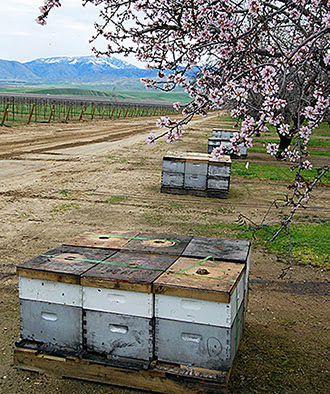
Researchers at the U.S. Department of Agriculture’s Agricultural Research Service have found that a component in almond nectar and pollen can reduce honeybee viruses and gut parasites, which are some of the leading threats to bee health and colonies.
The U.S. Department of Agriculture’s (USDA) Agricultural Research Service (ARS) study, published in the journal Insects, showed amygdalin – a naturally-occurring chemical compound found in the nectar and pollen of almond trees – decreased levels of chronic bee paralysis virus, black queen cell virus and deformed wing virus. The bees also showed increased levels of beneficial gut bacteria and lower levels of the gut parasite Lotmaria passim.
“We have found nectar chemicals can work as an antibiotic in bees, even against important viruses,” said Jay Evans, USDA-ARS research entomologist. “We were interested in amygdalin as a possible inhibitor of bee disease, because it is so important to the diet of honeybees.”
The bees were fed natural concentrations of amygdalin over a two-month period as part of the study conducted in a bee yard at the Bee Research Laboratory in Beltsville, Maryland. In the treatment group, bees received a sugar solution supplemented with dissolved amygdalin from a supplier. The control group just received sugar water.
The findings showed that amygdalin, which was previously reported to cause malaise in bees when fed sugar syrup, did not cause any negative effects to bee behavior.
Amygdalin is not only found in the nectar and pollen of almond trees, but in a variety of other crops, such as cherries, nectarines and apples. During almond pollination season, western honeybees inevitably consume the natural compound since almond crops are almost exclusively pollinated by honeybees.
The Agricultural Research Service is the U.S. Department of Agriculture’s chief scientific in-house research agency.
In California, honeybee colonies in bee boxes are placed in an almond orchard to pollinate the crop. Photo: USDA-ARS