

Innovation meets heritage at Creekside Valley Farms
Oregon hazelnut grower Paul Kuehne balances innovation with family legacy. Read how Creekside Valley Farms stays resilient and competitive.





5 minute read

When Paul Kuehne looks across the 12,000 acres that make up Creekside Valley Farms today, he sees more than fields of hazelnuts. He sees nearly a century of family history woven into the landscape of Oregon’s Willamette Valley — a region where his grandfather settled during the Great Depression.
“I grew up on a farm my grandpa bought in the Depression in the Yamhill County area,” he said. “I’ve watched this landscape change from grains, clovers and livestock to more permanent, higher-value crops like vineyards, blueberries and hazelnuts.”
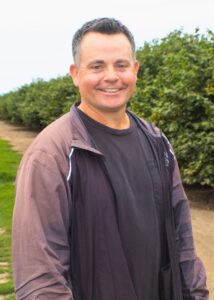 Kuehne’s childhood was steeped in agriculture. His grandfather’s operation included cherries, prunes, pears and walnuts. His father, now 82, continues to farm several hundred acres of grass seed. Though nuts were not part of the family business back then, they soon captured Kuehn’s imagination. While attending Oregon State University (OSU) to study general agriculture, he began farming hazelnuts on a few parcels he rented in 1998.
“I was already farming when I founded Creekside Valley Farms in 2006, but the turning point was when OSU began releasing new hazelnut varieties with resistance to eastern filbert blight,” he said. “That changed everything about long-term sustainability for hazelnuts.”
Kuehne’s childhood was steeped in agriculture. His grandfather’s operation included cherries, prunes, pears and walnuts. His father, now 82, continues to farm several hundred acres of grass seed. Though nuts were not part of the family business back then, they soon captured Kuehn’s imagination. While attending Oregon State University (OSU) to study general agriculture, he began farming hazelnuts on a few parcels he rented in 1998.
“I was already farming when I founded Creekside Valley Farms in 2006, but the turning point was when OSU began releasing new hazelnut varieties with resistance to eastern filbert blight,” he said. “That changed everything about long-term sustainability for hazelnuts.”
 His focus now is ensuring that Creekside Valley Farms remains sustainable — not just environmentally, but economically.
“My priority is keeping the farm profitable long-term,” he said. “We need a system in Oregon that allows farms to stay here and not get pushed out. A lot of local ag is in tough financial straits with depressed pricing and rising costs.”
After nearly three decades in agriculture, Kuehne credits the farm’s
growth to steady discipline and a willingness to adapt.
“Consistency, persistence, always watching costs and processes,” he said. “And you have to be willing to adapt to the environment you’re operating in. Whether that’s growing a different crop or adopting new technology, you can’t be afraid to evolve.”
Kuehne still loves what he does and the life it provides.
“I love the people I work with, the businesses I get to work with and the fact that I’m not in a big corporate environment,” he said. “Good or bad, I’m the one making the decisions. If I’m wrong, I own it. But I wouldn’t trade this life for anything.”
His focus now is ensuring that Creekside Valley Farms remains sustainable — not just environmentally, but economically.
“My priority is keeping the farm profitable long-term,” he said. “We need a system in Oregon that allows farms to stay here and not get pushed out. A lot of local ag is in tough financial straits with depressed pricing and rising costs.”
After nearly three decades in agriculture, Kuehne credits the farm’s
growth to steady discipline and a willingness to adapt.
“Consistency, persistence, always watching costs and processes,” he said. “And you have to be willing to adapt to the environment you’re operating in. Whether that’s growing a different crop or adopting new technology, you can’t be afraid to evolve.”
Kuehne still loves what he does and the life it provides.
“I love the people I work with, the businesses I get to work with and the fact that I’m not in a big corporate environment,” he said. “Good or bad, I’m the one making the decisions. If I’m wrong, I own it. But I wouldn’t trade this life for anything.”
Paul Kuehne
Finding a future in hazelnuts
OSU’s breeding breakthroughs — most notably the ‘Gasaway’ cultivar — gave growers new confidence to invest in orchards. “Before that, we had the older varieties like Barcelona, Casina, Lewis and Clark,” Kuehne said. “Those are all still out there, but they’re much more susceptible to blights, so no one is planting them anymore. When the new resistant varieties came out, that’s when I started really expanding.” Today, Yamhill is the farm’s dominant variety, though Kuehne also manages orchards of Jefferson, McDonald, Webster and other OSU-developed cultivars. Newer breeding work aims to stack multiple resistance genes and improve quantitative resistance. “There are now three mutations of the original eastern filbert blight,” he said. “Breeders are doing great work to layer resistance and protect trees moving forward.”Growing opportunity
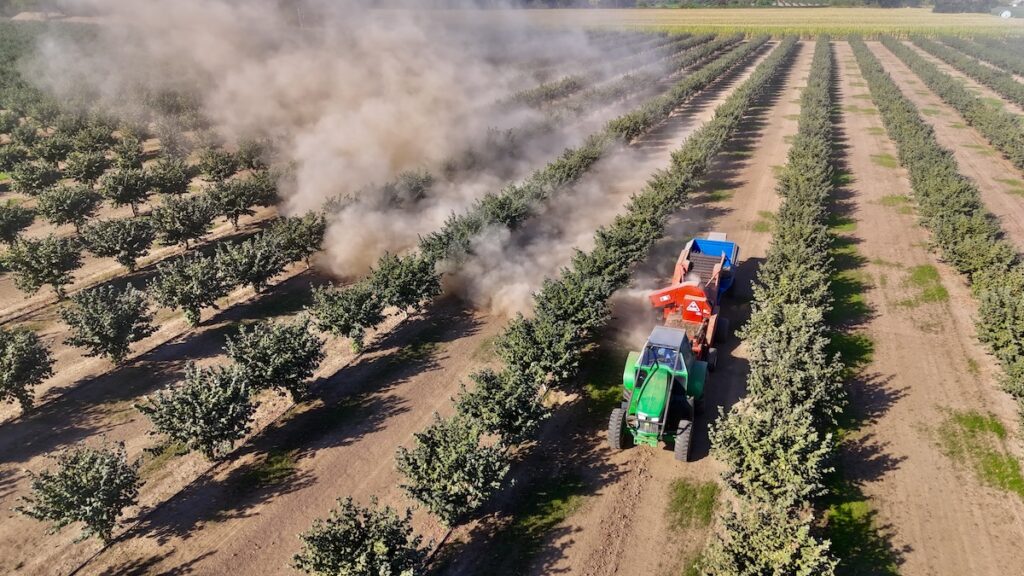
Creekside Valley Farms didn’t grow to 12,000 acres overnight. In the beginning, Kuehne’s goal was modest. “I never really planned on growing it to the size it is today,” he said. “Originally, I was just trying to get to around 1,500 acres so I could make a living farming on my own.” A key factor in the farm’s expansion has been diversifying into service-based revenue. Creekside Valley Farms provides drain tile installation, orchard planning, consulting, nursery starts and full-service management for hazelnut growers throughout Oregon. “A lot of hazelnut growers around here aren’t full-time farmers,” Kuehne said. “They might have 40 acres and another career, but they want to keep their farm and they’re interested in hazelnuts. That’s where we come in.” The company handles everything from selecting varieties and pollinizers to planting, irrigation setup, nutrient application and harvest management. “We grow the tree starts, sell them to growers and, in many cases, take them to their property and plant the orchard for them,” he said. Today, Creekside Valley Farms produces roughly 10 million pounds of hazelnuts annually, making it one of Oregon’s largest private producers.Creekside Valley Farms spans 12,000 acres in Oregon’s Willamette Valley, carrying on a nearly century-long family farming tradition. Photo courtesy of Creekside Valley Farms.
A diversified and resilient crop portfolio
Although hazelnuts are the company’s cornerstone, diversification remains a key strategy. Creekside Valley Farms rotates grass seed, clover, garlic and other seed crops. Blueberries provide another permanent crop that’s well-suited to the valley’s microclimate. These rotations enrich soil health, distribute risk and help stabilize the farm’s overall economic picture. “For the rotational crops, there’s a direct benefit,” Kuehne said. “If we grow grass seed, we like to rotate with clover. It lets us use different chemistries and build soil with a nitrogen-fixing legume.” Hazelnut orchards represent long-term investments once planted, but the surrounding cropping systems provide the flexibility the business needs.Sustainability at the core
Sustainability isn’t a marketing slogan at Creekside Valley Farms — it’s embedded into the operation’s daily decisions. One of the most impactful shifts has been transitioning to drip irrigation in hazelnut orchards. “Water conservation is a big thing,” Kuehne said. “With drip, we’re saving nutrients, reducing soil erosion and using less energy. There’s no sprinkler impact on the soil, and we’re pumping less water.” Another innovation is the adoption of SmartApply, a light detection and ranging (LiDAR)-based spray system used on the farm’s air blast sprayers. “It senses the density of the canopy and only puts out enough spray to cover that portion of the tree,” Kuehne said. “We’ve seen it cut our chemical usage almost in half. That’s been a big deal.” Together, these technologies support Creekside’s long-term sustainability vision: producing high-quality crops while conserving soil, water and natural resources so the land remains productive for future generations.A team built on local roots
Creekside Valley Farms employs about 26 full-time team members, many with farming backgrounds. During peak seasons, the farm supplements its workforce with H-2A workers, labor contractors, local staffing agencies and high school students seeking summer jobs. “We love bringing in kids from local schools,” Kuehne said. “We support 4-H and FFA by buying their animals or contributing to their projects, and it’s great to give them real experience on the farm.” The workforce reflects the values that built the company: respect for the land, a family-farm work ethic and a commitment to long-term stewardship. “A lot of the people who work here grew up on farms or did some farming earlier in their lives,” Kuehne said. “Some still have their own small projects. We promote that. It builds a team that understands the work.” To further support students pursuing agricultural careers, Kuehne launched the Creekside Valley Farms Scholarship, personally funding the program and encouraging local applicants. “I went to college, and I think it’s important,” he said. “I know there are kids who don’t have the opportunities I had or don’t know how to access programs. I wanted to offer something that might help someone decide to go to college instead of not.”Facing today’s challenges
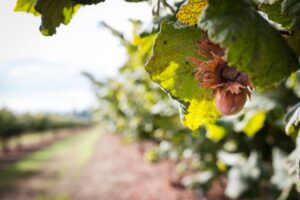
Like many Oregon growers, Kuehne remains concerned about the regulatory and economic pressures facing agriculture. “There’s been a lot of challenges since COVID,” he said. “Inflation, increased costs, new regulations — especially here in Oregon. We have to compete globally, but we also have some of the toughest regulations in the world. That makes it hard to compete.”Hazelnuts thrive at Creekside Valley Farms thanks to resistant varieties and sustainable orchard practices. Photo courtesy of Creekside Valley Farms.