

Understanding pistachio bloom and pollination can improve nut set, reduce blanks
Pistachio bloom timing and pollination practices directly impact yield and nut quality. Learn how growers can improve nut set and reduce blanks.





Key takeaways
- Bloom timing is critical to pistachio yield and nut quality
- Male and female flower synchrony is essential for pollination success
- Pollen viability declines rapidly after release
- Dust during bloom can significantly reduce nut set
- Proper pollenizer selection improves orchard performance
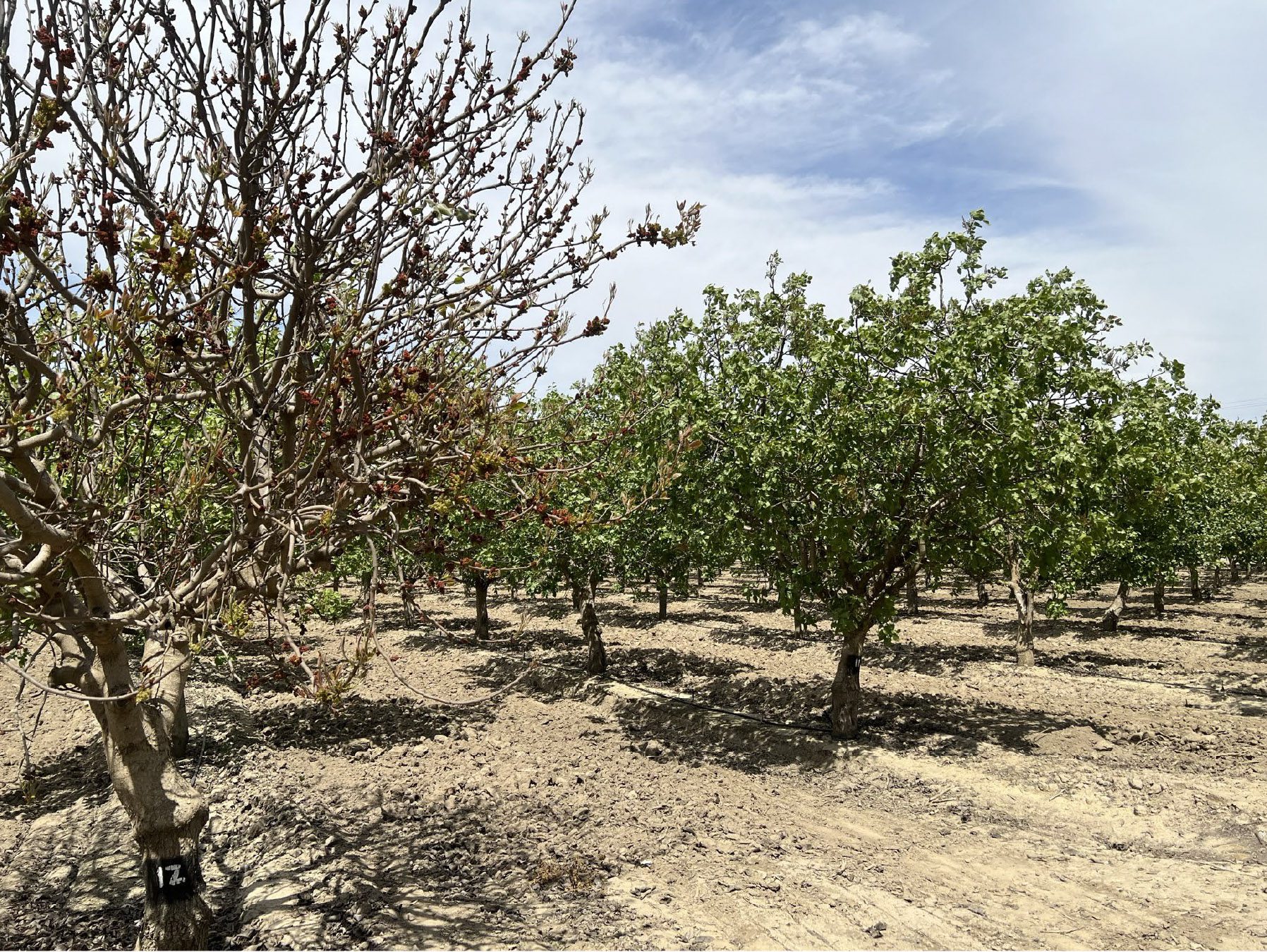
Late March through mid-April marks the time of pistachio bloom in California’s Central Valley. The dynamics at bloom not only determine the anticipated yield of the crop but also offer predictors of nut quality at harvest.
Although many factors affecting bloom are outside of a grower’s control, certain orchard management practices can enhance pollination success and minimize blanks. Understanding the fundamental processes that occur during bloom may save growers money and enhance the crop’s economic potential.
Male and female flower dynamics
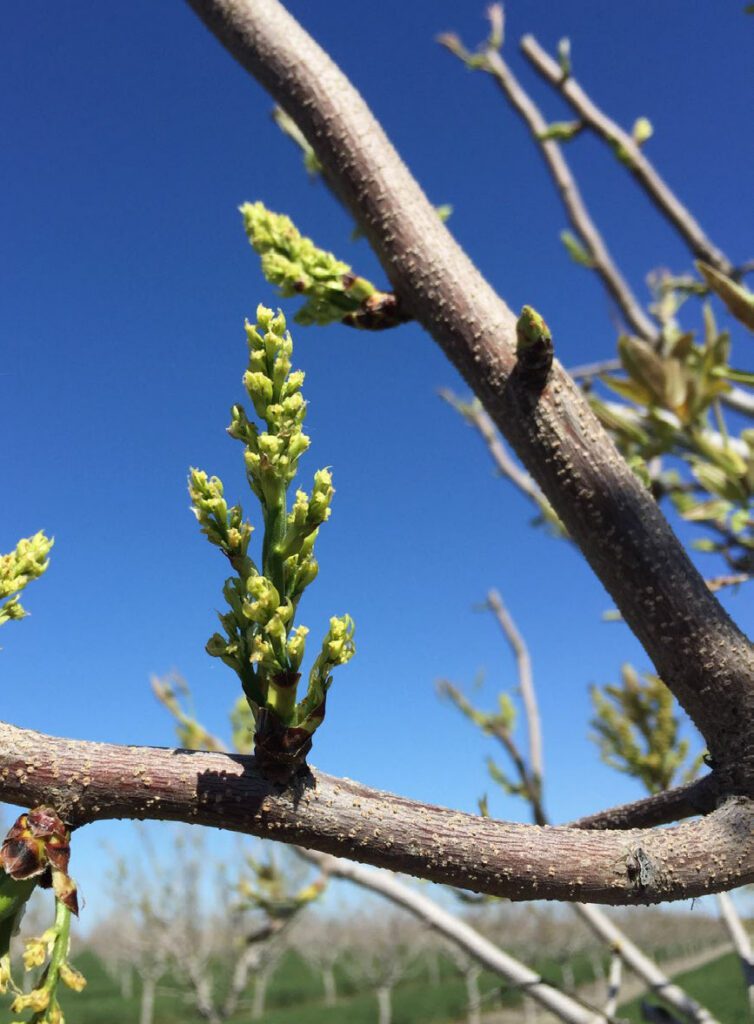
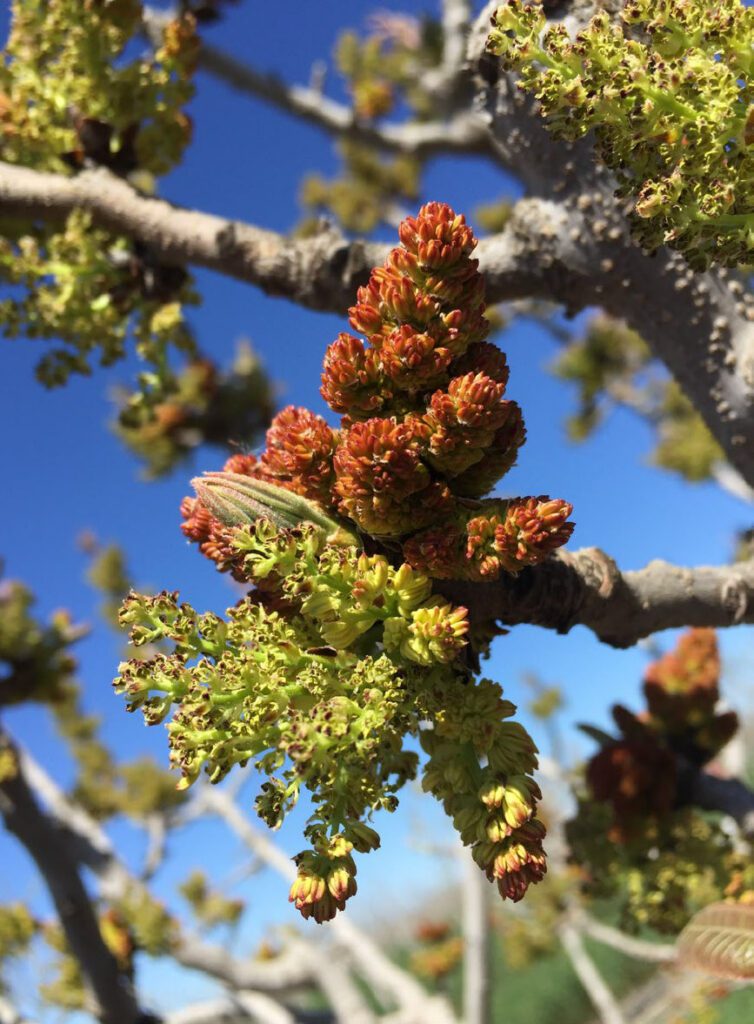
Pistachio is a dioecious crop that produces male and female flowers (Figure 1) on separate trees (Figure 2). Growers select male pollenizer cultivars for bloom synchrony with corresponding female cultivars. The pollen is disseminated by wind, and pollenizer trees should be located within 66 feet of female trees to ensure adequate pollination.
As a result, male trees are typically planted every fifth tree in every fifth row. This establishes a ratio of 1:24 male to female trees while maintaining minimum optimal distance between female trees and pollenizers.
Timing and pollen viability
Successful pollination and fertilization depend on the timely deposition of viable pollen on a receptive pistil.
Most pollen is shed over seven to eight days, though the total pollen shed period lasts about two weeks.
Daily pollen release is highest in the morning between 9 a.m. and 11 a.m. Once released, pollen remains viable for several hours. However, viability drops markedly during the first hour after release, and only 10% of pollen grains remain viable 24 hours later.
Successful fertilization requires pollen deposition on receptive stigmas. Peak pistil maturity lasts up to two days. Pollination that occurs after this peak period may increase the likelihood of misshapen nuts or early nut drop before maturity.
Pollen viability and quantity both influence nut set and quality. Too much pollen deposited on a stigma may trigger flower abscission. Research suggests that deposition of just 15 pollen grains on the stigmatic surface is ideal for fertilization of an individual ovule. A modest amount of viable pollen is necessary to achieve adequate nut set and splits at harvest. High percentages of nonviable pollen deposited on the stigma may lead to excessive blanks at harvest.
Dust during bloom can reduce nut set
Orchard management practices that create excessive dust can inhibit nut set and promote the development of blanks. Research conducted at UC Davis showed that dust deposition on the stigmatic surface can damage pollen viability and stigma quality, reducing nut set by more than 30%.
Dust creates a barrier on the stigma, disrupting contact between pollen and the cells of the stigmatic surface. Dust can also induce parthenocarpy (fruit set without fertilization), resulting in blank nuts.
Because the pistachio pericarp (shell) expands before the embryo develops, blanks may go unnoticed until mid-season. Consequently, growers should avoid orchard management tasks that generate dust, such as flail mowing, during peak bloom.
Choosing the right pollenizers
Selecting pollenizer populations that bloom in synchrony with female trees is one of the most important decisions during orchard development.
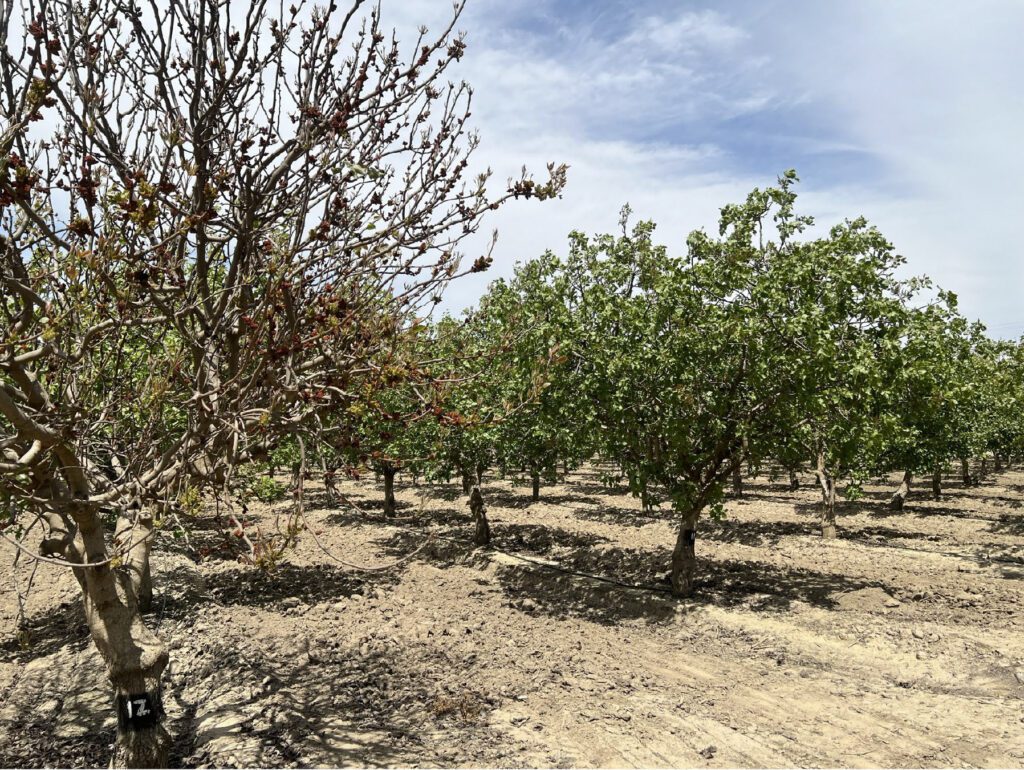
Low-chill winters tend to offset the male and female bloom, with males tending to bloom later than coordinating females. For example, in two low-chill winters (2014 and 2015), researchers observed male bloom occurring four to nine days after coordinating female bloom in research blocks.
To achieve adequate pollination under these conditions, researchers recommend planting supplemental pollenizers. For example, ‘Kerman’ blocks that rely on ‘Peters’ or ‘Famoso’ as standard male pollenizers may benefit from the addition of early-blooming males such as ‘Randy’ during low-chill years. Similarly, ‘Golden Hills’ and ‘Lost Hills’ orchards that rely on ‘Randy’ as a standard pollenizer may benefit from the addition of ‘Tejon’ in low-chill winters.
Some growers introduce these supplemental males by replacing a portion of the standard male trees. Others graft supplemental pollenizer genotypes onto a portion of the canopy of existing pollenizer trees.
Artificial pollination considerations
Artificial application of supplemental pollen may benefit production when pollination is limited. Generally, these situations occur in isolated plantings or when male and female bloom are poorly synchronized.
Research on artificial pollination has produced inconsistent results, with yield improvement limited to individual sites during low-chill years. Artificial application of supplemental pollen can pollinate individual florets that are open on the day of dispersal. However, each inflorescence contains approximately 300 flowers (florets), and individual buds and florets open and mature over time. As a result, application of supplemental pollen may only target a small percentage of florets in a single dispersal event.
Because excessive pollen can trigger flower abscission in pistachio, several researchers caution against the use of supplemental artificial pollination, warning that it might limit crop production.
Management decisions influence pollination success
Setting a crop requires successful pollination followed by fertilization. Growers can improve synchrony of male and female bloom by selecting appropriate pollenizers and, when necessary, adding supplemental pollenizers in orchards.
Management practices that generate dust should be avoided during bloom, as dust may reduce fruit set and induce parthenocarpy, resulting in blanks. Finally, excessive pollen deposition should be avoided, as it may trigger flower abscission and reduce yield.
FAQ
When does pistachio bloom occur?
Late March through mid-April in California’s Central Valley.
Why is pollen viability important?
Because it directly affects fertilization success and final nut set.
How does dust affect pistachio production?
Dust can reduce pollen viability and cause blank nuts.
What are pollenizers?
Male trees selected to provide compatible pollen for female trees.
Is artificial pollination effective?
Results are inconsistent and may only benefit specific conditions.
Photos courtesy of Elizabeth Fichtner.
Elizabeth Fichtner has served as a University of California Agriculture and Natural Resources (UC ANR) orchard systems advisor in Tulare County since 2009. Her research and extension program focuses heavily on walnut, pistachio, almond, pecan and olive, with disciplinary emphases on pomology and pest and disease management. Prior to joining UC ANR, she served as a postdoctoral scholar at UC Davis, focusing on forest diseases in both California and England.