

Water planning for a different future in California orchards
California nut growers are adapting to SGMA groundwater regulations that affect water access, farm planning and profitability. See what this means for growers.





Ket takeaways
- SGMA was enacted in 2014 to address unsustainable groundwater use.
- Groundwater sustainability targets extend through 2040 for key basins.
- Growers face increased pressure to plan for long-term water availability.
- Some acreage in the San Joaquin Valley may leave production.
- Participation in local GSAs can help growers understand regulations and opportunities.
- Technical assistance and grant resources are available through multiple agencies.
The California State Legislature passed a historic groundwater law over a decade ago, but many smaller nut growing operations are still trying to figure out what it means for their farms. According to the State Water Resources Control Board, the Sustainable Groundwater Management Act (SGMA) was enacted in 2014 to halt the unsustainable use of groundwater and bring balanced levels of pumping and recharge to groundwater basins.
Luis C. Paniagua, SGMA community education specialist in Tulare and Kings counties at UC Agricultural and Natural Resources (UCANR), and Catherine Van Dyke, director of water policy at the Community Alliance with Family Farmers (CAFF), shed some light on how growers are adapting to SGMA, where confusion remains and what steps growers can take as it ramps up.
Understanding the shift
“Historically, groundwater was really like private property, if you had a permit from the county, you could drill your well and pump out however much water you needed. In 2014, the state realized we’re pumping these aquifers dry,” Van Dyke said.
This fundamentally key resource makes up 40% to 60% of the water usage Californians consume annually. According to Van Dyke, in years like 2026 where slow snowpack occurred, groundwater is all the more important. SGMA’s goal is to have the high and medium priority basins reach sustainability by 2040.
SGMA prioritizes local control, with over 260 local groundwater agencies responsible for managing their local aquifer. SGMA does not just apply to large producers, it applies to smaller growers as well. Despite the law’s importance, some growers remain uncertain on how to approach SGMA implementation.

policy at the Community Alliance with Family
Farmers (CAFF). Photo courtesy of CAFF.

and Kings counties at UC ANR. Photo courtesy of Luis C. Paniagua.
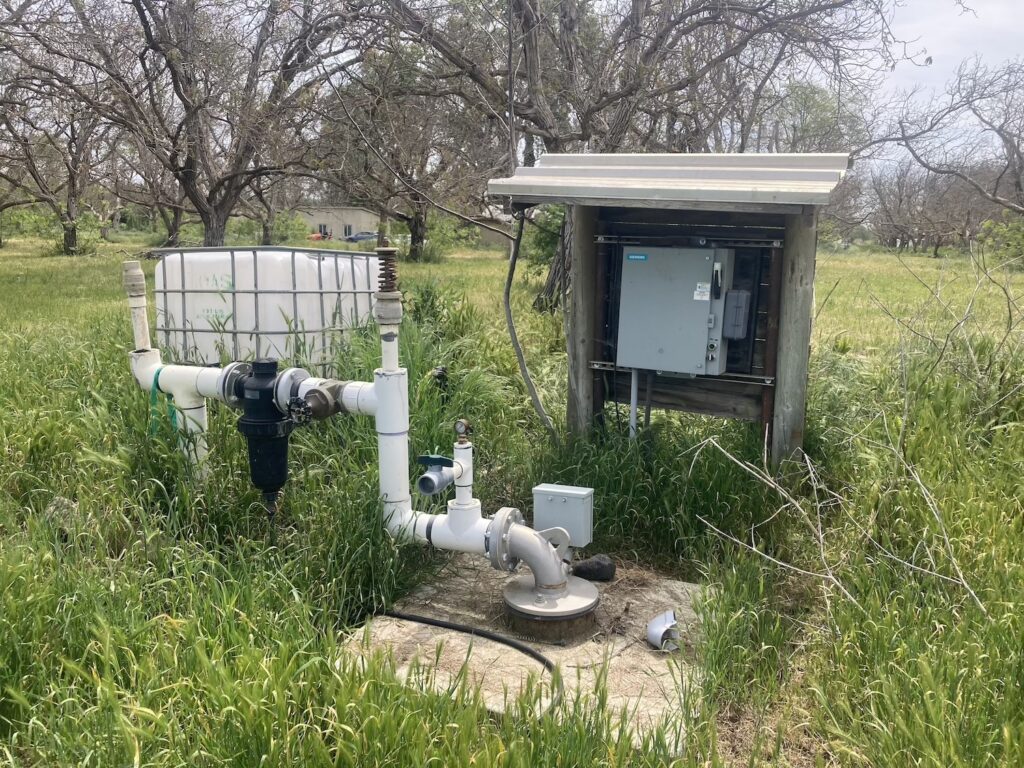
including irrigation for crops. Photo courtesy of CAFF.
The challenges of growers
Because the state of California has such variation in its hydrology, SGMA is handled with each local sub-basin, and the impact on individual growers varies. While some nut growers are unsure how SGMA implementation will affect production, others are seeing increasing economic pressures leading to real-world challenges showing up on farms.
Nuts are a water-intensive crop, so it’s important California growers understand what their water picture could look like a decade from now. While historically growers may have added more plantings without thinking of what their water situation looks like, that is no longer a luxury any grower can afford.
“Water pricing and longterm farm financial planning remain major sources of stress and questions,” Paniagua said.
“It also means more deliberate water planning to maintain profitability over time and adapting to a water-restricted future. For some operations, it may lead to tough but strategic decisions.”
To give a sense of scale, the Public Policy Institute of California has estimated that between 500,000 and one million acres in the San Joaquin Valley will have to go out of production.
While some farmers may need to make difficult decisions on selling acreage or adjusting their farming practices, Paniagua believes these changes also encourage more efficient and resilient water management. There may be growing pains with SGMA implementations, but these regulations will ensure Californians have access to groundwater in the future, experts said.
“I heard the manager of the East Turlock sub basin say: the groundwater issue is like cancer, and you have to go through chemotherapy to treat the cancer, so you’re going to feel a lot of pain before it gets better,” Van Dyke said.
SGMA may encourage more diversification through different income strategies, banking water, seeking surface water access or developing groundwater credits where available. Other effects could include improved irrigation efficiency and even new farming methods to improve water retention in soil or crop yield or recharge.
Paniagua said SGMA will likely increase the importance of better economic planning, water budgets and selective fallowing or partial transitions rather than all-or-nothing changes.
The road ahead
Despite its challenges, there are several resources available to help smaller scale nut growers know where to begin and how to move forward within SGMA’s framework.
Experts agree the best way to navigate SGMA implementations is to identify your local Groundwater Sustainability Agency (GSA). By actively participating in your GSA, growers can understand the local rules, projects and opportunities.
“Even small steps toward engagement can make future planning much easier,”Paniagua said.
In addition to active involvement with your local GSA, there are several resources from the UC Agriculture and Natural Resources small farms team and the Community Alliance of Family Farmers available to growers.
Paniagua also shared several additional resources available to smaller nut growers, including:
• USDA
• NRCS
• Local Resource Conservation Districts
• Irrigation/water districts
• Farm Bureau
• Commodity boards
• UC Cooperative Extension/UC ANR
• Agricultural commissioner or county/city ag agencies.
Many of these programs can help connect growers to technical assistance and available grants.
“SGMA is not going away, so taking a proactive approach now can create more options and flexibility later,” Paniagua said.
FAQ
What is SGMA?
The Sustainable Groundwater Management Act is California’s groundwater sustainability law enacted in 2014.
Who does SGMA affect?
It applies to both large and small agricultural producers in groundwater basins.
Why is groundwater important to California agriculture?
Groundwater supplies a significant share of California’s annual water use and is critical during low snowpack years.
What challenges do nut growers face under SGMA?
Growers may encounter higher water costs, planning requirements and potential production changes.
Where can growers find help with SGMA compliance?
Resources are available through GSAs, UC ANR, CAFF, USDA, NRCS and local conservation districts.
Gabrielle Rippel is a freelance writer with experience in multiple industries. Check out her recent work at getagrippel.com.