

Finding balance between supply, demand to achieve groundwater sustainability
A fifth-generation California farmer talks about water issues and the Sustainable Groundwater Management Act.





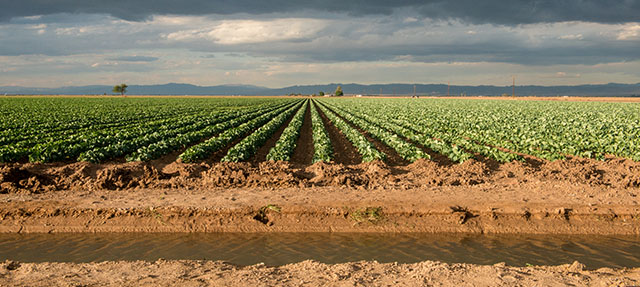
The Public Policy Institute of California talked with Emmy Cattani, a fifth-generation farmer from Kern County, about some options.
PPIC: Talk about ways that agriculture can reduce land fallowing in implementing SGMA.

Emmi Cattani
Related to that, we need to explore opportunities to increase groundwater banking (recharge projects that track how much water is stored underground by different parties). Expanding groundwater banking will enable us to use surface water storage more strategically, especially in light of climate change bringing more intense rain storms and less snow. Partnering with urban water agencies can increase the supply of banked water for the agricultural sector. There are many examples of this in Kern County, where urban partners lease storage capacity in agricultural water basins, paying for that storage capacity by leaving water in the basin.
PPIC: What are the best ways to increase flexibility in water management to help agriculture adapt to SGMA?
At a bigger scale, we could expand district-to-district trading. While this has been going on for decades, it only accounts for a small percent of water used in California. To significantly bring the cost of SGMA down, we’ll need more trading between districts and across basins. To make more water available for these trades, districts must involve their growers, giving them the option to accept incentives in exchange for fallowing their least-productive land. And a final opportunity is for districts to provide incentives to growers who want to convert land to less water-intensive uses, such as habitat and solar. Historically, districts have provided no incentives to growers who convert lands to solar—they just lose their water rights. We need to compensate growers for reducing water use on converted lands.
PPIC: What is needed to make the best use of lands that come out of production?
EC: First, if farmers take a “go it alone” approach, fallowing could happen haphazardly and even bring negative consequences. One promising solution is to bring renewable energy development to the San Joaquin Valley. With a federal infrastructure bill on the horizon, there’s an opportunity to support increased transmission capacity. Solar will utilize the most land, but we can also expand renewable uses of agricultural and dairy biomass. Developing renewable energy on retired farmland would contribute to the economy and create jobs.
Second, we need to have water districts and groundwater sustainability agencies weigh in on planning for where lands could be retired. A lot of groups are weighing in on things like fallowing land for habitat. But people can get protective about their property rights, and it’s jarring to see your farm on someone else’s map of lands that should be fallowed, so this has to be thoughtful process. Water districts are locally run and trusted entities. They could use revenue from growers’ property assessments or groundwater pumping fees to buy land to take out of production. They have the administrative staff and internal skills to manage the conversion of fallowed lands to recharge basins, or to work with land trusts or public programs for converting it to habitat or other uses. Most growers don’t have the resources do this themselves, and I think having districts claim that role is really important for a smooth transition.