

Research grant to improve hurricane guidelines for Georgia pecan growers






The one-year study aims to improve hurricane mitigation guidelines for pecan growers and understand how hurricane risk changes with tree size and orchard placement, according to a news release.
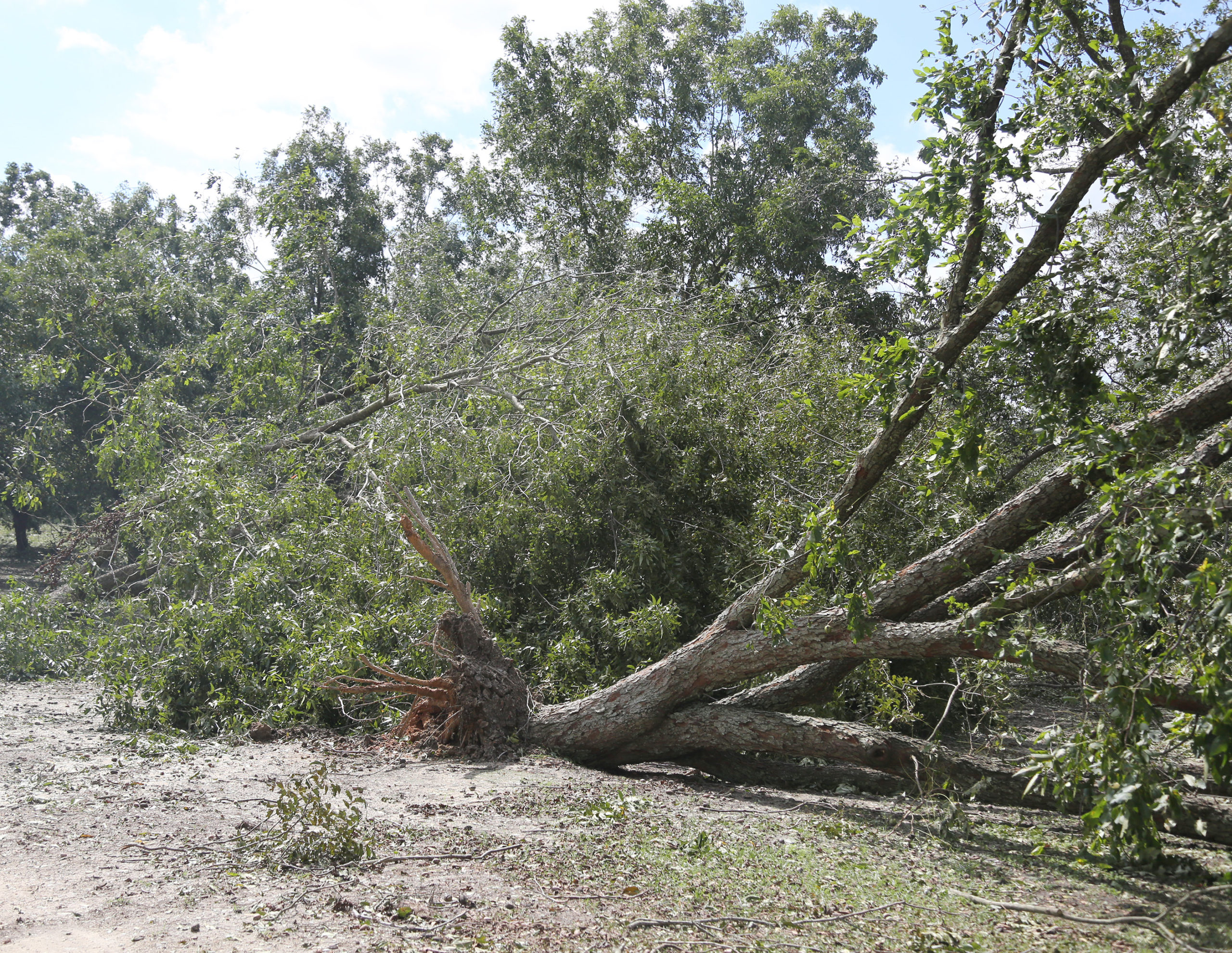
Uprooted pecan trees due to Hurricane Michael.
In the past five years, southern Georgia—home to one-third of US pecan production—was devastated by two major hurricanes. In late August of this year, Hurricane Idalia made landfall in the Florida panhandle as a Category 3 hurricane and continued northeast, affecting more pecan orchards in Valdosta, Georgia, and surrounding areas. Five years earlier, in October 2018, Hurricane Michael made landfall as a category 5 storm in the Florida panhandle and continued toward Albany, Georgia, causing an estimated $560 million in lost pecan production in the southwestern part of the state.
The primary focus of the research is to estimate how wind risk varies with tree size and orchard placement. Pecan trees, ranging from young saplings to towering giants, face differing degrees of vulnerability to hurricane forces. The study will determine the relationship between tree size and wind risk, enabling growers to implement preventative measures.
“The existing guidelines to help pecan growers with hurricane mitigation are fairly sparse,” says the study’s co-lead Lenny Wells, a pecan extension specialist at the University of Georgia in Tifton, said in the release.
“Current guidelines provide advice on which varieties and soil types may be most susceptible to hurricanes, but they rely on anecdotal observations,” he said in the release. “More information is needed to provide long-term estimates of risk for growers. The most promising way to reduce wind risk appears to be canopy pruning which can reduce wind risk and stimulate pecan production.”
Jeffery Cannon who co-leads the study is a landscape ecologist at the Jones Center at Ichauway has studied impacts from Hurricane Michael on pine forests. “Wind risk in pine is well-studied, but pecans are unique because they are planted with side spacing, irrigated, and pruned,” Cannon said in the release. “This makes understanding pecan risk more complex, but it offers intervention points where wind susceptibility can be reduced.”