

Seed grants set to support pollinator health and biodiversity





Announced one year ago by the Almond Board of California (ABC), the Pollinator Protection Plan expands the industry’s long-standing commitment to researching, protecting and improving bee health.
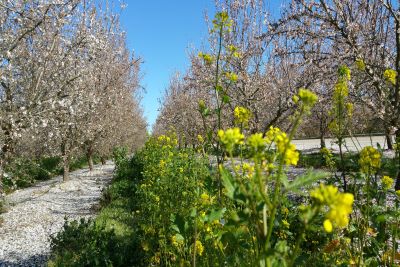
One of the five tenets of the Pollinator Protection Plan – increasing floral diversity on farm – led the Almond Board to create and fund the Bee+ Scholarship program which provides grants to farmers to help offset the cost of planting forage and habitat in and around their orchards.
Another component of the Bee+ Scholarship encouraged farmer participation in Pollinator Partnership’s Bee Friendly Farming program. To date, 54,202 acres of almonds have been Bee Friendly certified, meaning farmers are actively protecting pollinator populations by implementing positive, incremental changes on-farm.
“As a partnership designed by nature, almonds take our responsibility for honeybee health seriously,” said Josette Lewis, chief scientific officer for the Almond Board. “Through these efforts, we diversify and expand the nutritious forage that honey bees find in almond orchards each year while extending our efforts outside the orchard to benefit native pollinators too.”
Ben King, a fourth-generation almond farmer based in Colusa, California, has planted cover crops on his farm for more than five years. “It comes out of a love for bees,” King said, “and recognizing the importance of taking what nature gives you and acting as a steward.”
By investing in blooming cover crops, King has not only seen a benefit to pollinators, but also to the overall health of his orchard, especially as it relates to soil. “Soil is the foundation of farming and by planting pollinator habitat you are creating a healthy ecosystem,” King said. Cover crops also provide positive impacts on carbon sequestration and can improve the amount of moisture that can be stored in the soil.
“It’s clear this is the path forward,” King said. “But there is a long-term investment associated with making these changes. Luckily, the Almond Board is progressive and supports these initiatives on farmers’ behalf.”
In 2020, ABC invested more than $750,000 in activities that directly benefit pollinator health. This included $300,000 in incentives and technical assistance to expand pollinator forage and habitat on-farm. ABC will continue to invest in providing tools and options to farmers to continue expanding pollinator habitat in 2021.
Bolstering these efforts, ABC and the University of California, Davis have partnered to publish a cover crop management guide for almond farmers. The culmination of years of research on the management and benefits of cover crops for both pollinators and soil health, this practical guide will be released this summer and drive adoption of a practice which promotes biodiversity and carbon sequestration.
This work builds upon a longstanding commitment to pollinator health. Since 1995, the California almond community has supported 126 research projects – more than any other crop group – to address the five major factors impacting honeybee health, including varroa mites, pest and disease management, lack of genetic diversity, pesticide exposure, and access to forage and nutrition.
To learn more about the mutually beneficial relationship between almonds and bees, along with the California almond community’s commitment to protecting pollinators, visit Almonds.com/Bees.
Scholarship drives farmer planting of pollinator habitat on-farm. Photo: California Almond Board