

Navigating a strong crop, building strong markets for the future
California’s walnut industry is managing a strong 2025 crop while growing global demand. Find out how the sector is building long-term markets.





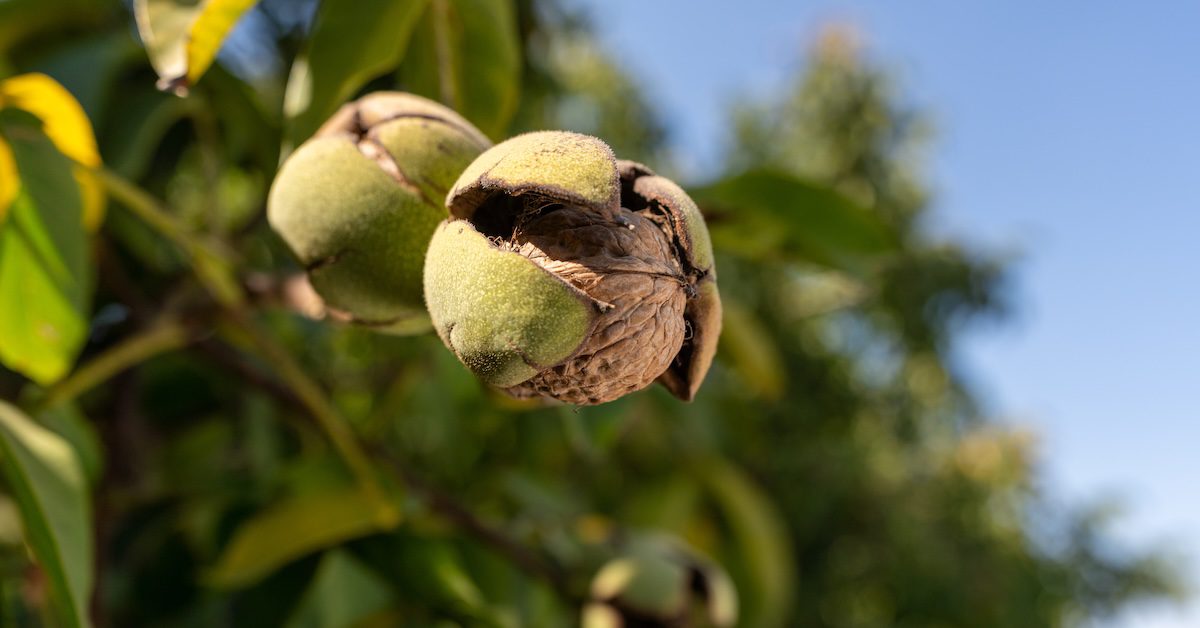
The November shipment report showed handler receipts through Nov. 30, 2025, at 778,436 tons, exceeding the USDA National Agricultural Statistics Service (NASS) objective crop estimate of 710,000 tons. The higher crop volume is attributed to ideal growing conditions and minimal walnuts being rejected at the huller/dryer, as well as overall larger nut size and higher edible yield compared to previous years.
Forecasted fall rains impacted some growing regions more than others, and had growers and harvest crews working 24/7 to harvest the walnuts and deliver them to the huller/dryer before the rain started. Due to the high volume coming in before the rain showers, handlers reported receiving sufficient quantities of high-quality, inshell walnuts to fulfill market demand. Kernel sales will be minimally impacted as handlers conduct extensive quality assurance inspections, including laser and hand sorting.
The November shipment report showed strong early market activity, with shipments and committed sales at over 52% of the higher crop volume. Inshell sales rebounded from last year’s short crop, and year-to-date sales are up 23% and 30%, respectively, for domestic and export markets. Overseas buyers slowed some of their buying activities, waiting to see industry crop figures.
Some handlers report that they are running their cracking lines at full capacity well into February and expect to see more kernel sales as the international “pipeline” continues to need more walnuts.
Driving global demand
Global consumption of walnuts is on the rise. USDA’s Market Access Program (MAP) continues to fund promotional efforts across Asia, Europe and the Middle East. Additional resources from the Regional Agricultural Promotion Program (RAPP) have expanded outreach into high-potential markets, such as Taiwan, Singapore, Malaysia, Morocco and Vietnam.
Although international trade policy continues to shape access and demand, overseas growth prospects remain strong. The California Walnut Commission remains focused on addressing barriers to trade, including tariffs and other forms of non-preferential treatment, by engaging elected officials, agencies and international trade associations to improve long-term market conditions, and strengthen access for California walnuts.
The U.S. walnut industry is closely following the trade negotiations between the U.S. and India. Since 2018, India has a 100% tariff on all walnuts.
It is our hope that with a consumer base of more than 1.4 billion people, when tariff relief is included in a new U.S./India trade agreement, the California walnut industry would see significant gains from today’s roughly 16,000 to 20,000 tons shipped annually from California, to above 100,000 tons or more.
Repositioning walnuts for modern consumers
There is also a repositioning happening of California walnuts to ensure they are modern and relevant across markets.

At home, the industry is reaching the next generation of walnut consumers with a new look that is fresh, energetic and showcases walnuts as part of their lifestyle.
While the industry’s 30 years of health-related research is the backbone, marketing now appeals to the holistic view of wellness embraced by younger consumers and focuses on how California walnuts help them feel good.
While efforts are largely driven by social media, including dozens of social media influencers who are talking about the “feel good” power of California walnuts, it is supported with paid media and in-person activations at wellness and lifestyle events.
At retail, the “repositioning” is a physical one as we aim to move California walnuts beyond the baking aisle and into the fresh produce section.
This means working with retailers across the country on year-round primary and secondary displays, cross- merchandising and co-marketing programs that highlight walnut quality and versatility.
Based on nationwide scan data and market basket research, when walnuts are in the market basket, the value of the shopping cart increases over $53. The analysis shows those consumers also buy more fresh produce. In fact, of the top 10 items in the shopping cart, eight are produce items.
Walnuts are a convenient and versatile addition to all meals and snacking opportunities, and merchandising them adjacent to fresh fruits and vegetables provides consumers with an easy, nutritious and tasty solution to building healthy meals.
Flavor is at the center of marketing efforts, with the addition of tools like a new Walnut Flavor Wheel, which highlights the unique characteristics of California walnuts, including their appearance, texture, taste and aroma.
Developed by the Board and Commission’s Chef-in-Residence Robert Danhi, the flavor wheel is being used to educate chefs, culinary students and product developers to help them better understand the unique taste, texture and aroma of our walnuts.
Repositioning walnuts to be more than a “nutty flavor” helps them to discover the possibilities of California walnuts in formats like walnut “meat,” cream, butter and more.
Efforts to engage food and ingredient manufacturers are also underway to show the power of walnuts across categories, including snacking and plant-based categories.
Commitment to quality and research
California walnuts have built a global reputation on the promise of quality. This starts with growers’ commitment to best practices in orchard management and extends to how walnuts are handled, packaged, shipped, stored and merchandised.
At the California Walnut Board and Commission, we support production and postharvest research to improve and promote quality throughout the supply chain. This means not only continuing to invest in varietal development but also exploring how postharvest practices can extend the flavor and positive eating experience (e.g., “taste life”) for as long as possible.
Domestically, we’re also monitoring quality at the point of sale and reporting findings back to handlers, who are encouraged to form even deeper relationships with retailers and explore options for direct selling, which creates opportunities to educate retailers about the category, drive promotions and create velocity.
A long-term focus on grower prosperity
As the industry navigates current market dynamics, at the Board and Commission, our focus remains clear: grower prosperity.
Growing demand for California walnuts across markets, occasions and consumers is a slow, long-term process. We are repositioning walnuts not as your grandmother’s nut, but to appeal to a younger demographic with a nutrient rich, fresh, convenient and enjoyable addition to any meal or snacking occasion.
Our goal is to elevate premium California walnuts to be more present at retail, featured on more restaurant menus and included in more new products.
In short, we want more people eating more walnuts, more often and in different forms, and we believe that the industry, by working together, can make this a reality.
The California Walnut Board (CWB) and California Walnut Commission (CWC) represent more than 4,600 California walnut growers and approximately 70 handlers, grown by multi-generation family farmers. The CWB promotes the usage of walnuts in the U.S. through publicity and educational programs, and provides funding for walnut production, food safety and postharvest research. The CWC is involved in health research with walnuts as well as domestic and export market development activities.