






Nov 6, 2025Blue Diamond Growers reports final 2025 almond crop update
California almond growers faced a challenging finish to the 2025 season, as Blue Diamond Growers’ final crop progress report — covering Sept. 30 through Nov. 2 — highlights weather interruptions, moisture hurdles and the transition into orchard renewal.
According to the crop progress report, a mid-October Pacific storm system brought between 0.25 and 2 inches of rain across the San Joaquin Valley, complicating the end of harvest. Daily high temperatures peaked just above 90°F early in the period before dropping into the low to mid-70s during the rain events, then rebounding into the mid-80s toward month’s end.
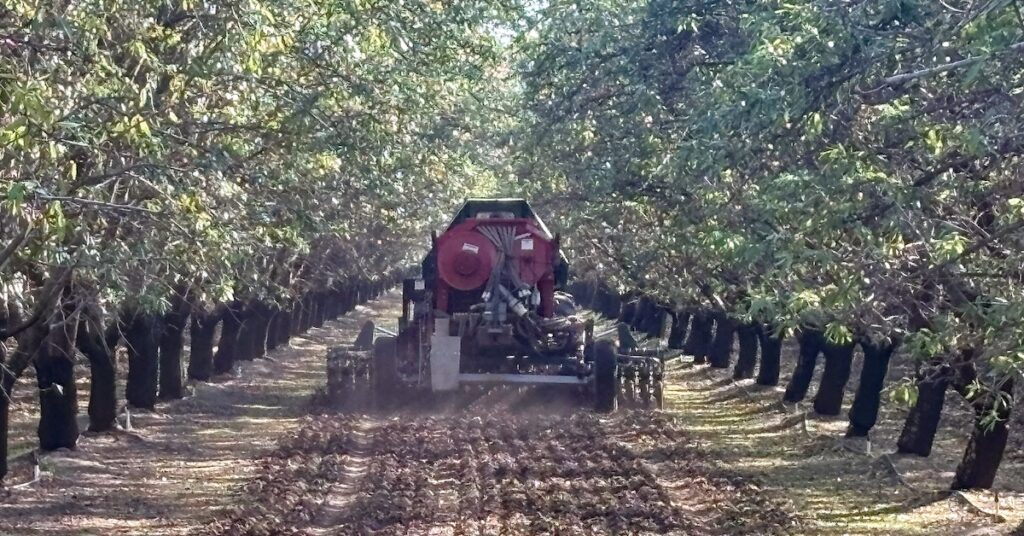
Harvest crews worked long hours to bring in late varieties, including Monterey, Fritz and delayed pollinators such as Butte and Padre. Many growers opted to take in nuts that were not yet fully mature ahead of the storm to avoid moisture damage. However, high hull and kernel moisture levels posed significant challenges.
In several areas, in-hull nuts were too wet for standard stockpiling. Some growers spread almonds on open ground to dry, but heavy morning dew and shorter daylight hours limited drying time. Orchards that received the highest rainfall saw portions of the remaining crop lost.
Processors also reported hurdles with moist hulls, which slow flow rates, complicate separation and increase the risk of mold or even spontaneous combustion of stored hulls. Green or immature kernels created additional drying demands for safe storage.
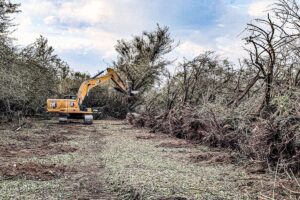
With harvest nearly complete, attention has shifted to postharvest tasks. Growers are irrigating to replenish root-zone moisture, applying soil amendments and fertilizers, planting winter cover crops, and preparing for tree training and pruning in young orchards. Older or low-producing blocks are being removed, chipped and incorporated back into the soil.
Looking ahead, growers are turning their focus to the 2026 bloom season. Key activities include vegetation management, orchard sanitation and the removal of mummy nuts, all critical steps in reducing navel orangeworm pressure and disease carryover.
Photos courtesy of KC Clendenin, Austin Jackson, Justin Elam and Mel Machado.