






November/December 2025
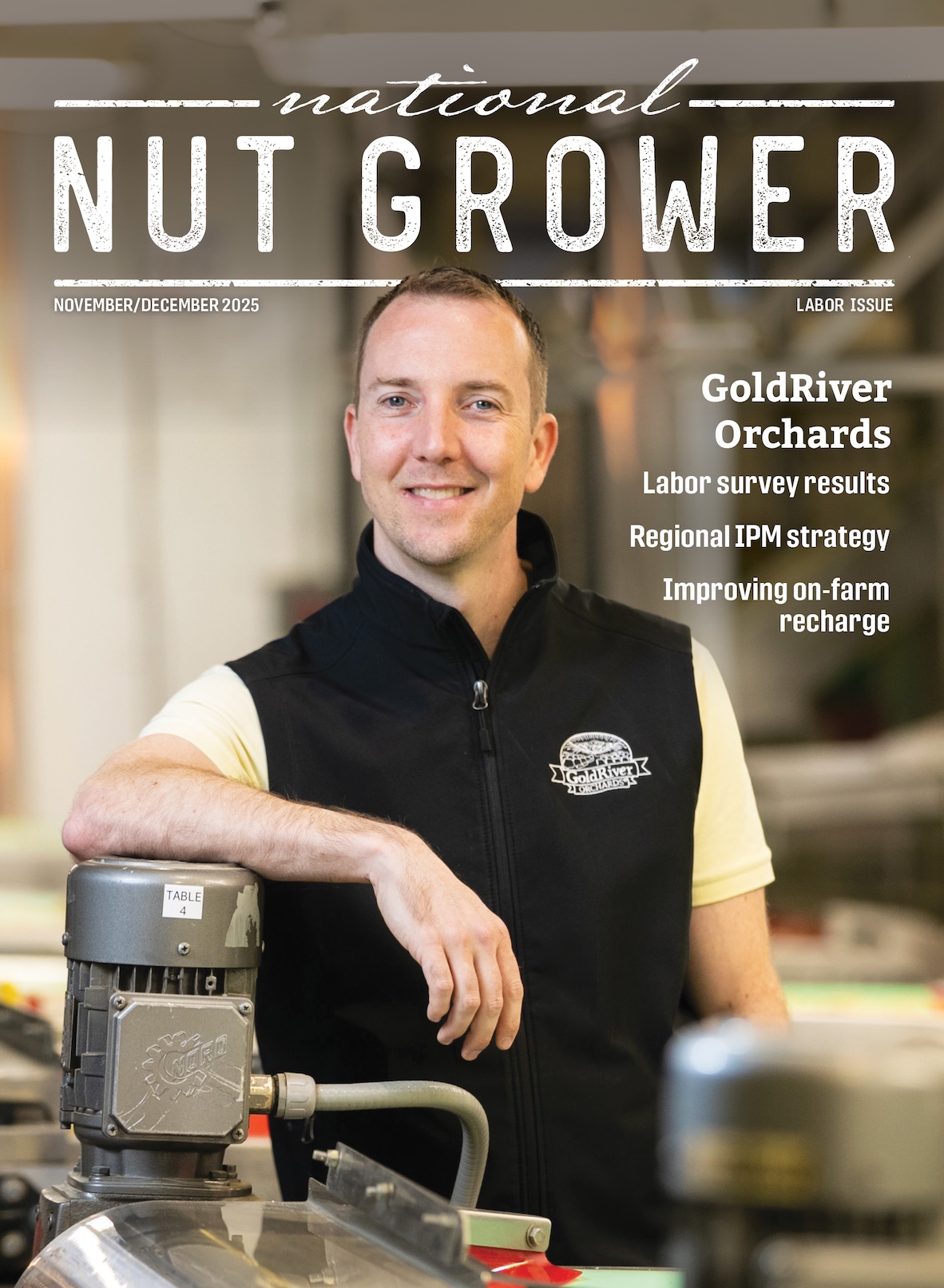
GoldRiver Orchards: fifth-generation leadership drives quality and sustainability
For more than a century, the Barton family has been a fixture in California’s walnut industry. From its base in Escalon, GoldRiver Orchards has long been synonymous with quality, consistency and a deep respect for the land. Today, that proud legacy continues under the leadership of Jeremy Barton, a fifth-generation
grower who’s combining tradition with technology to guide the company into a new era as GoldRiver’s president.
“The first rule of thumb is, if it’s not broken, don’t fix it,” Barton said. “The Bartons have been growing walnuts for over 100 years. I’m standing on the shoulders of giants in terms of the walnut industry.”
That sense of history shapes everything at GoldRiver Orchards. But Barton’s forward-thinking approach is what’s ensuring its future. With a background in both technology and wine, he’s introduced data-driven management, operational efficiencies and product innovations that go far beyond traditional walnut processing. It’s a delicate balance — one that honors his family’s farming roots while embracing the tools and trends shaping tomorrow’s marketplace.
A family legacy with a modern edge
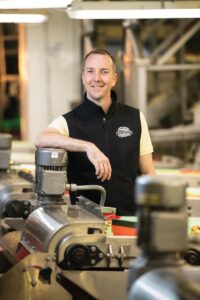
Barton didn’t start in agriculture. His experience in the tech sector taught him the value of systems and analytics, while his time in the wine industry instilled a passion for craftsmanship and flavor. Both skill sets now serve GoldRiver well.
“We’re bringing a lot of innovation into our operations by upgrading our tech stack, building efficiencies and driving down costs, which ultimately gets better returns back to the growers,” he said.
Barton is quick to credit his brother and uncle, who continue to lead the family’s growing operations, for maintaining the high standards established generations ago.
“My brother Josh is the fifth-generation grower in the family, so I lean into his and my uncle’s knowledge quite a bit,” Barton said. “It’s truly a family effort.”
That foundation allows Barton to focus on the company’s evolution. When coming aboard, one of his first goals was to improve internal systems by consolidating data and creating a more connected, efficient operation.
“We started by rationalizing our systems, consolidating, ensuring our team was well-trained and getting all master data correct,” he said. “That allows us to connect everything through a data warehouse and build reports for smarter, real-time decision-making.”
Quality above all
GoldRiver Orchards has built its reputation on quality — and Barton said that’s what sets the company apart in a crowded marketplace.
“We are obsessed with quality,” he said. “That’s where you bring the heritage of fifth-generation growing and extend that through our operations and handling all the way to customers worldwide.”
From the orchards’ focus on light-colored kernels and high edible yields to the state-of-the-art sorting and food safety systems in their processing plant, quality drives every step.
“Even though we’re about the 35th largest handler out of 70 in the country, we’re the second-largest exporter to Korea,” Barton said. “We put our money where our mouth is as high-quality producers.”
Korea and Japan are among GoldRiver’s most important markets, both with demand and exacting specifications.
“Walnuts are like grapes — different specs, colors and sizes depending on global markets,” Barton said. “Technology helps operators make the right decisions without leaving everything to managers.”
At the same time, GoldRiver’s grower partners are crucial to maintaining quality. Barton takes a hands-on approach with them, ensuring that communication flows both ways.
“We also keep growers informed about markets, harvest and what gets them the best returns,” he said. “We educate them on grade sheets, edible yields and managing defects. We approach growers from a perspective of humility — we know they know how to farm. We aim to learn together and improve returns for both the grower and GoldRiver.”
Sustainability that works
For Barton, stewardship of the land is both an ethical responsibility and a smart business strategy. GoldRiver Orchards has long been recognized for its resource-
conscious approach to farming — an ethos Barton is taking even further.
“On the farm and at GoldRiver, 85% to 90% of our energy is covered by solar,” he said. “We’ve invested heavily in that.”
The company has also long practiced efficient water management, matching soil types and topography for the best results from drip irrigation and strategic flood systems.
Now, GoldRiver is moving into new territory with a joint venture that converts walnut shells into biochar, a soil supplement that captures carbon and can generate additional energy for plant operations.
“Reducing cardboard waste is another focus, but shells are the big one,” Barton said, “It’s about taking sustainability even further into plant operations.”
People first
Barton is as passionate about investing in people as he is in technology — and that’s been key to GoldRiver’s success.
“Talent beats everything,” he said. “To have top talent, you must be competitive in wages, culture and benefits. We mix fresh ideas from new hires with the expertise of heritage employees who deeply understand walnuts and GoldRiver’s values. That combination gives us the best of both worlds.”
Meeting market demands
As global tastes evolve, Barton sees opportunities to redefine how consumers experience walnuts.
“Customers are mostly looking for consistency,” he said. “They’re willing to pay prices that allow growers to make a profit if they get that consistency year after year.”
But there’s also a shift happening in how people think about the product itself.
“The biggest trend I see is buyers increasingly interested in taste, not just color,” Barton said. “Walnuts are food, not a commodity. Highlighting taste and quality is a very positive trend.”
That focus on flavor inspired GoldRiver’s latest innovation: a walnut bitter designed for cocktails and cooking.
“We’re close to launching a walnut bitter, which we hope to launch on Amazon in the first quarter,” Barton said. “That’s our first step toward becoming a more retail and direct-to-consumer business while honoring the heritage we’ve built.”
Barton sees this as the beginning of a broader push to connect directly with consumers.
“Our biggest opportunity is getting out of the commodity business,” he said. “We want bulk business to be more of an ingredient business and less of just bulk.”
A future rooted in tradition
Despite the focus on innovation, Barton said that the company’s future depends on never losing sight of its roots.
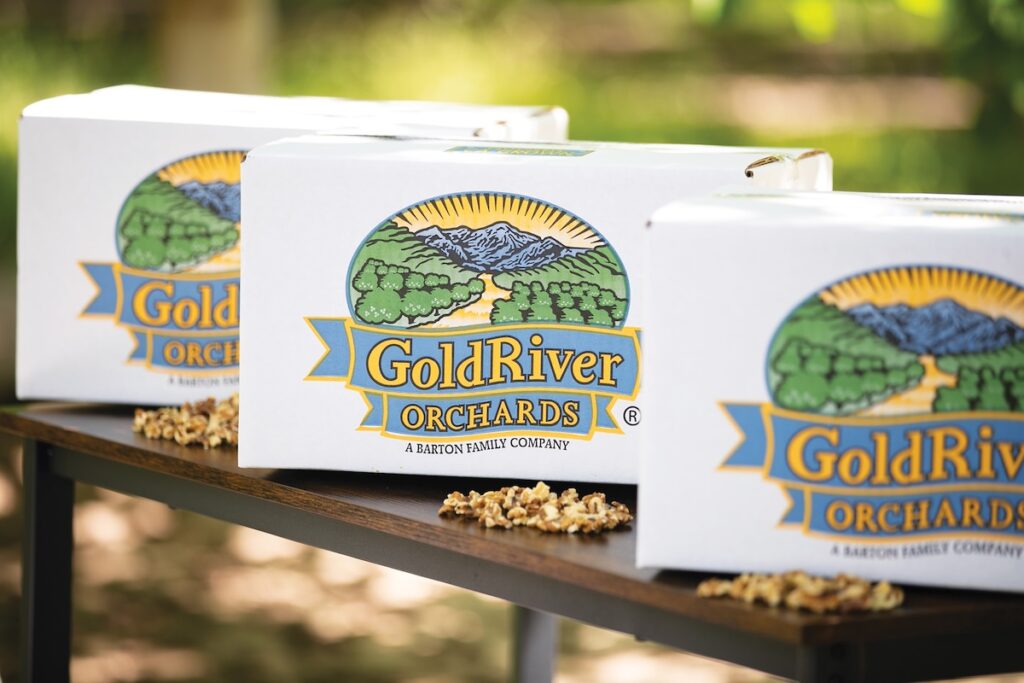
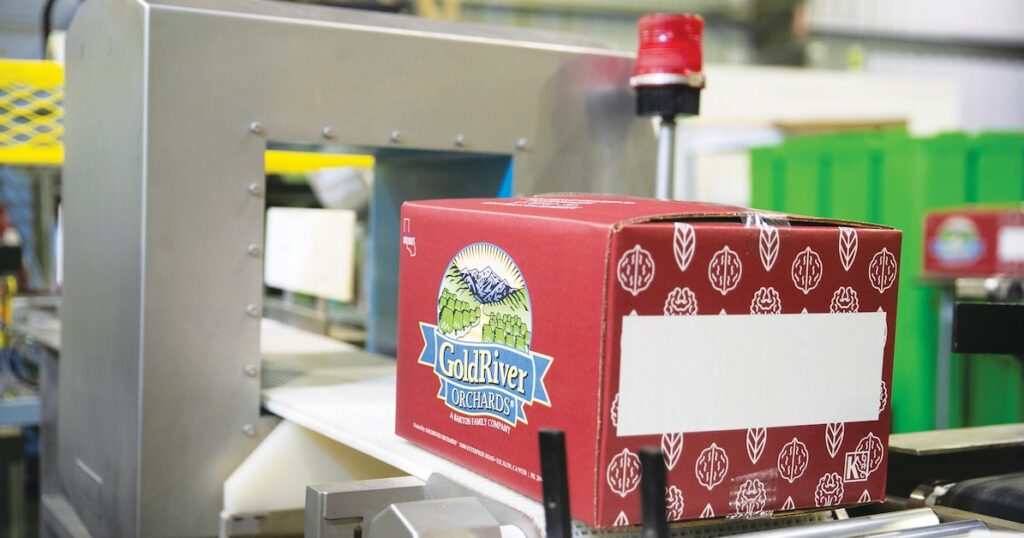
“Quality trumps anything you say,” he said. “We try to let the quality in the box speak for what we do.”
That philosophy, passed down through generations, continues to guide every decision made at GoldRiver Orchards. With sustainability, technology and taste leading the way, Barton is confident that the next 100 years will be as strong as the last.
“It’s about honoring our heritage while continuing to evolve,” he said. “At the end of the day, we’re caretakers — of the orchards, our people and of a legacy that means something.”
Top photo: Brothers Josh Barton, vice president of orchard operations (left) and Jeremy Barton, president, represent the fifth generation leading GoldRiver Orchards into a new era. Photo courtesy of GoldRiver Orchards.